AI is very good at some work and wasteful at the rest. We help leaders tell the two apart: AI for the reading, judging and deciding, traditional software for the counting, calculating and record-keeping, with the AI directing it.
We work with the systems you already run, in stages small enough to learn from. A number you can take to the board.
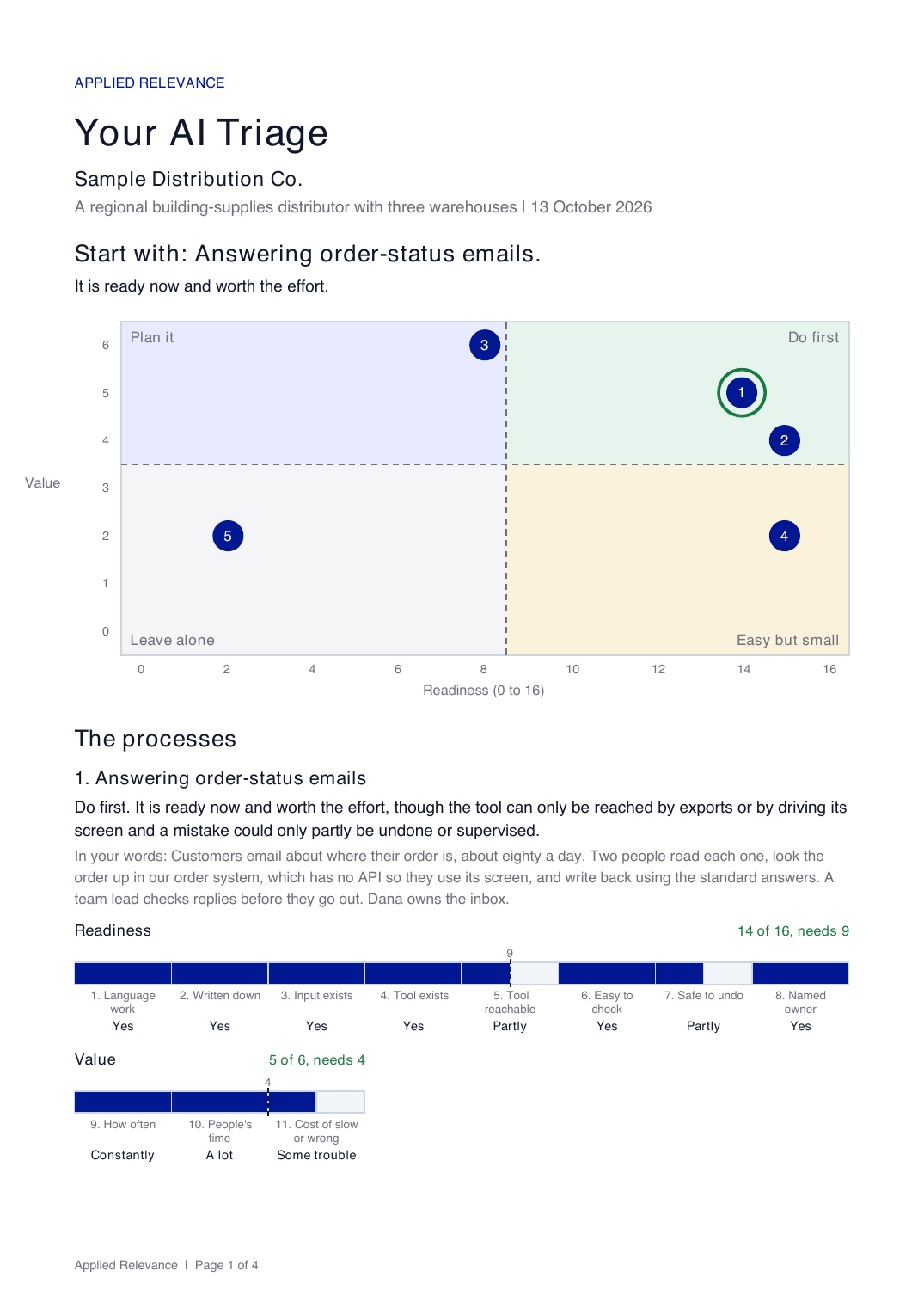
A two-minute check, all clicks. No email needed to see where to start.
This field runs on jargon, and we have spent ten thousand hours in it. We know the vocabulary because we have lived in it. You should not have to.
We treat you as a smart professional who wants to understand how the thing works without learning a dozen acronyms to do it. Ask us anything and you will get an answer in ordinary words.
There are a lot of misconceptions about what AI is and how it works, and some wild claims about where it ends up. That is a little like predicting the end stage of electricity in 1926. The useful work then was wiring the building well, and it is the useful work now.
Your people want to work with AI, and many already are. It shows up in four ways, and all four are reasonable.
Some people have rebuilt how they work and are far more productive than a year ago. Most of what they know lives in their own habits, and nobody else gets the benefit.
Clever things built in an afternoon that nobody but the person who wrote the prompt will ever use. Good practice for them. Not yet a change to the business.
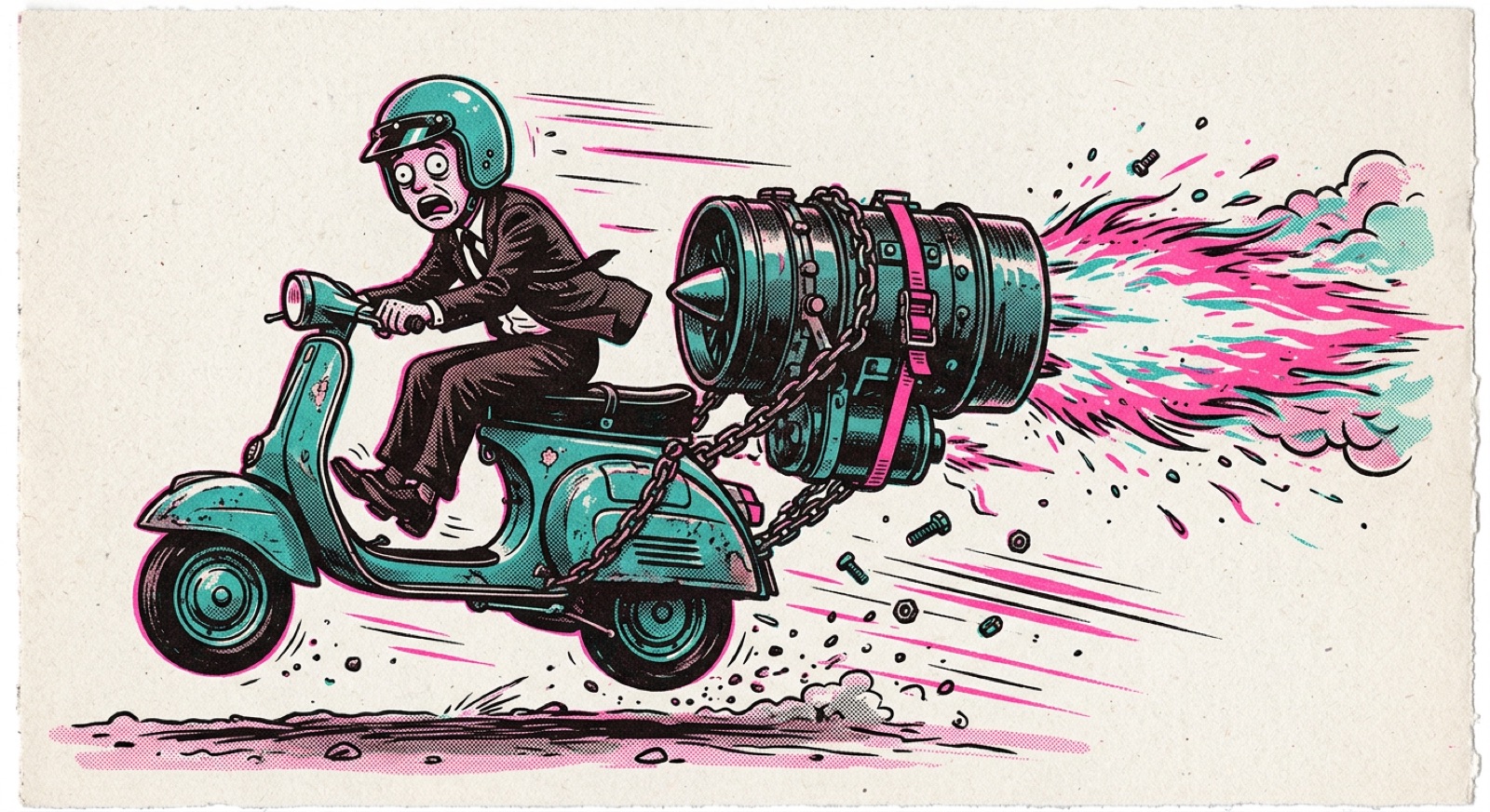
Expecting judgment, exact arithmetic or perfect recall from something that generates plausible text. The disappointment is predictable, and so is the fix.
Prompting reluctantly, and using AI as a search engine or an answer engine. It is very good at both. But is that what the business needs from its people using AI?
Individual enthusiasm does not add up to organizational change on its own. Somebody has to decide what the business needs from AI, own the result, and use it in front of everyone else.
That is a top-down job, and we work with leaders who have personal skin in the game.
If a person cannot do the process end to end, even slowly, a machine will not do it faster.
Business schools have taught it for a century: make the process work for people first, then speed it up. Clear steps, clear ownership, a clear definition of done. Only then is it worth handing to a machine, and by then you know exactly what you are asking it to do.
So we start with the business problem, not the technology. What is the job, who does it today, and where does it actually get stuck?
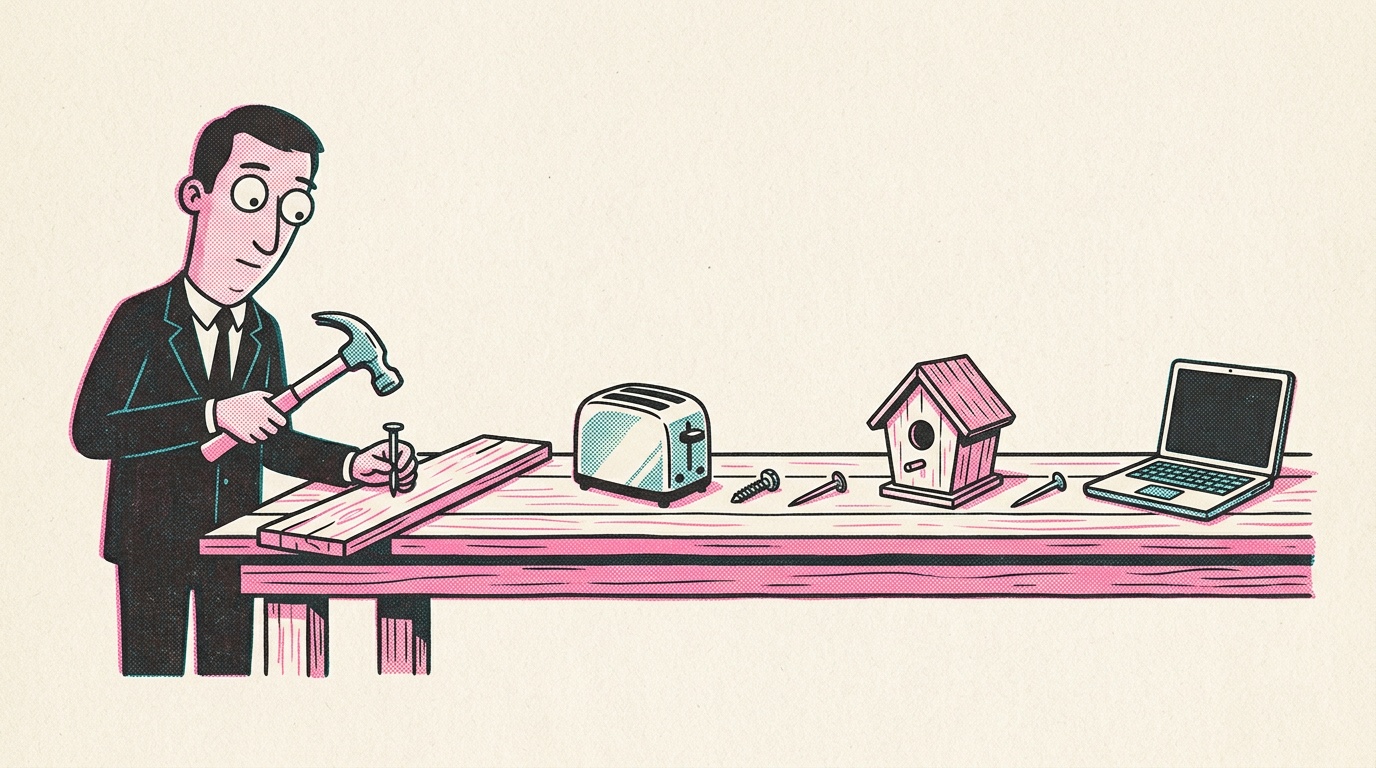
A language model produces text one small piece at a time, and that is remarkably powerful. It is also only one of several proven ways to automate business work. Decades of older tools came before it: systems that search a company’s documents, organize what a business knows, and apply fixed rules. They give the same answer every time, you can check their work, and they are cheap to run. The skill is knowing which to use where.
Step 1
A language model produces text, and for reading, drafting, summarizing, sorting and deciding what to do next, it is exactly the right tool.
Step 2
Adding a column of numbers is arithmetic, not prose. A spreadsheet or database does the math exactly, every time. A model can return a plausible-looking answer without doing the sum. We have the AI direct the real tool.
Step 3
Search systems, and the ways businesses organize what they know, have spent decades getting the right record in front of the right reader. Use them to find it, and use AI to read it.
Step 4
Baseline the process, automate a slice, and check the cost and the errors against it. Keep what works. Mistakes stay small, early and cheap.
Some work needs an AI. Some needs a spreadsheet. Most needs both, with something sensible in charge.
The demo is the easy part. Anything that runs your business has to survive contact with your data, your people, and your auditor.
Generic AI gives generic answers. We ground it in your own records so what comes back is about your company, not about companies in general.
Every answer traces back to the record it came from. Your people check it in seconds instead of taking it on faith, which is what earns trust.
Who can see what, what it is allowed to do, and a log of everything it did. The controls your auditor will ask about, built in from the start.
Before it runs and after, because the models change underneath you. Last quarter’s result is not a warranty on next quarter’s.
Start small, prove it works, then decide how far to take it. The approach is the same for a bank, an agency, a drugmaker or a factory.
We read how your organization works and where AI would take real load off it. You get the highest-leverage place to start, costed and sequenced, with plain advice on what not to build and what to wait for.
1–2 weeks
We put it into your highest-leverage process, on the systems you already run, with the cost tracked from day one. Access controls, logging, and an audit trail so you can show it holds.
5–10 weeks
This field changes every few months. We keep what you built working, keep the numbers checked against the baseline, and keep your leadership current.
Monthly
Applied Relevance also makes a product. Epinomy WMS runs a working warehouse: it drives Universal Robots arms, talks to PLCs over MODBUS TCP, and deploys air-gapped for sites that will never put their operations on someone else’s cloud.
We mention it because it keeps us practical. Software that has to run a warehouse teaches you quickly which jobs need AI and which need a plain, reliable program.
See Epinomy WMSA sampling of the better-known organizations we have worked with.
Chase, Fidelity Investments, Morgan Stanley, Allstate
Pfizer, GlaxoSmithKline, Merck, Schering, Aventis, Discovery Health
AT&T, Alcatel, Avaya, EMC
United Nations, International Monetary Fund, Lockheed Martin
HBO, MTV, Condé Nast, Dow Jones, BusinessWeek, Scholastic, Bowker, IHS Jane's
Pepsi, Coca-Cola, Quaker, Kodak, The Home Depot, Lowe’s
Siemens, Alcoa, Mercedes-Benz
Deloitte, KPMG, PricewaterhouseCoopers, Ernst & Young, McKinsey & Company, Booz Allen Hamilton
We have spent thirty years in the technologies that came before: enterprise search, organizing what businesses know, and managing and retrieving information at global scale, across public sector, financial services, pharmaceuticals, telecommunications and more. The tried-and-true techniques still work, and they pair well with what AI does best.
We work in whatever you already run. We get things wrong too, so we build in stages small enough that mistakes show up early and cost little. Part of our value is knowing what not to build yet, or what to wait six months for because it is about to arrive inside software you already pay for.
We take on a small number of clients at a time.
The first step is a Napkin Sketch: a video call where we sketch where AI could help you, what to leave alone, and whether a Blueprint is worth your time. No slides, no pitch.
Book a Napkin Sketch